
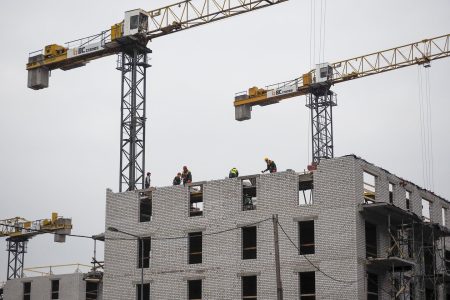
"In Sweden (and not only) house prices flew into space," economist Žygimantas Mauricas said in his account. Annual house price growth in Sweden is now as high as 23%, which, according to economists, is the fastest growth rate in history. Apartment price growth jumped to 12 per cent. Similar trends are observed in other developed countries. "For example, annual house price growth in the US has accelerated to 12% (the fastest growth since 2006), while in many Countries of the European Union prices are also rising at the fastest pace since the house price bubble of 2005-2006. Interestingly, real house price growth (i.e. in line with inflation) is the fastest in OECD countries since 1973," Mauric wrote. However, he is not surprised by this trend, as "the pandemic is coming and passing and economic stimulus remains". "For example, after the SARS epidemic in Hong Kong in 2003, house prices rose by as much as 30% in 2004, so history seems to repeat itself (unless central banks and governments press the brake pedal)," he said. According to Maurico, demand in the housing market is determined by several factors. One of them is that residents spend more time at home during quarantine, so they pay more attention to the disadvantages of existing housing, and when they are often seen, the desire to buy a new home also comes. As people are likely to continue to work more time from home, there will also be a desire to have a separate work space. Therefore, according to the economist, more spacious apartments or houses are being sought. "House prices in Sweden are rising faster than apartments," Mauric said. Another reason for purchasing a new home is the significant amount of money saved due to the restrictions imposed on travel abroad and leisure services. "In Lithuania, the amount of household deposits during the COVID-19 crisis has increased by as much as 20%", he calculated. As well as one of the reasons, Mauric also identifies people's fears that the unprecedented pouring of money into the economy will depreciate their savings in the future, so residents invest part of their money in housing. "Ultra-low interest rates also stimulate investment in housing, as other alternatives are either fixed "loss-making" (e.g. GPA yields in many euro area countries are negative even in the very long term) or high-risk (e.g. share prices have already reached pre-crisis highs). So investors are looking for alternative investments," the economist said. However, he urged not to forget something and to be conscious. "The higher you rise, the lower you may fall", so I wish not to lose common sense, especially since the more the housing market heats up, the more likely it is that governments and central banks will start cooling it. So the end of the party may come much earlier than many expect at the moment. In addition, you do not need to put all the eggs in one pint and in any case you need to diversify your investment portfolio," mauricas recommended.
Source: https://www.lrytas.lt/verslas/rinkos-pulsas/2021/05/21/news/bustu-kainos-isskrido-i-kosmosa-ispeja-kad-vakarelio-pabaiga-gali-ateiti-gerokai-anksciau-19451561/